
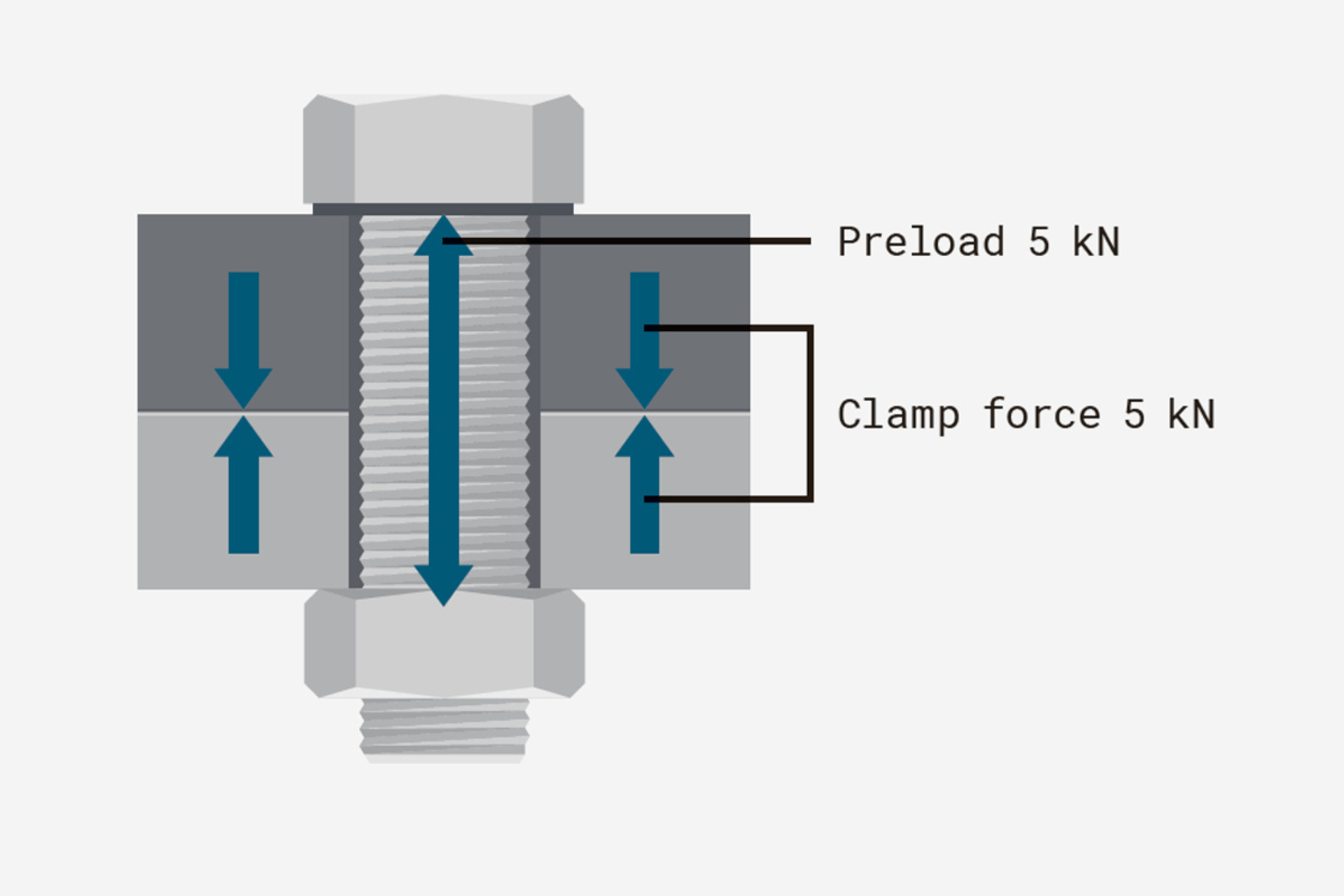
When fasteners fail, the cause is rarely the bolt itself. In most cases, failure happens because the fastener was never carrying load the way it was designed to. The key reason behind this is incorrect preload—the clamping force created when a fastener is tightened.
At RealBolt, we consider preload the foundation of every reliable bolted joint.
What Preload Really Means
Preload is the tension created in a bolt when it is tightened. This tension clamps the joint members together, allowing friction between the surfaces to resist external loads such as vibration, shear, and movement.
A properly preloaded fastener keeps the joint stable while protecting the bolt from carrying direct loads. Without enough preload, the joint separates slightly under load, forcing the bolt to absorb stress it was never designed to handle.
Correct preload turns a fastener from a connector into a structural element.
Why Incorrect Preload Causes Failures
Under-preloaded fasteners lose clamping force quickly when exposed to vibration or thermal changes. This leads to loosening, fatigue cracking, and eventual joint failure.
Over-preloading is equally dangerous. Excessive preload permanently stretches the bolt, reducing its fatigue life and increasing the risk of sudden fracture. Many fastener failures happen not during operation, but days or weeks later due to hidden over-stretching.
Both conditions compromise safety and reliability.
Preload vs Torque: The Critical Difference
Torque is only a tool used to achieve preload—it is not the preload itself. Friction in threads, under the bolt head, and in washers can consume most of the applied torque.
This means two fasteners tightened to the same torque can end up with very different preload levels. Without understanding this difference, torque-only tightening creates unpredictable results.
Engineers focus on preload because that is what actually holds the joint together.
How Engineers Control Preload in Critical Applications
In high-risk systems, engineers use methods such as torque-angle tightening, bolt tensioners, or direct tension measurement to achieve accurate preload.
They also control surface finish, lubrication, and washer selection to reduce friction variability. These practices ensure consistent joint performance, especially in heavy machinery, energy systems, and structural applications.
Preload control is a key part of engineering design—not just installation.
How RealBolt Supports Preload-Critical Fastening
RealBolt fasteners are manufactured with precise thread geometry and material consistency to support predictable preload behavior. Our products help reduce variability during tightening and improve joint reliability.
By combining quality fasteners with technical understanding, RealBolt helps industries build joints that stay tight, safe, and reliable throughout their service life.