Home » Applications » Fasteners for Solar Energy & Renewable Projects
In solar energy and renewable projects, application-specific fasteners secure module frames, support rails, trackers, inverters, and grounding assemblies while preserving alignment under service loads. These industrial fasteners act as structural fasteners and precision components that maintain clamp force, transfer loads efficiently, and support repeatable assembly across field-built systems.
Installed across rooftops, carports, and utility-scale sites, these joints face cyclic wind loading, vibration, thermal expansion, preload loss, and corrosion exposure from humidity, salt, and pollutants. Proper pairing and load distribution are essential to limit galling, loosening, and stress concentration, while high-strength bolts improve fatigue resistance at mounting points.
Reliability depends on verified material properties, controlled manufacturing tolerances, and qualification to ISO and ASTM or DIN requirements relevant to mechanical fastening and corrosion performance. Engineering review, torque testing, and installation validation help confirm industrial fastening systems for performance-critical components used in long-life renewable infrastructure.

Threaded fasteners designed for strong mechanical joints across structural and industrial assemblies.
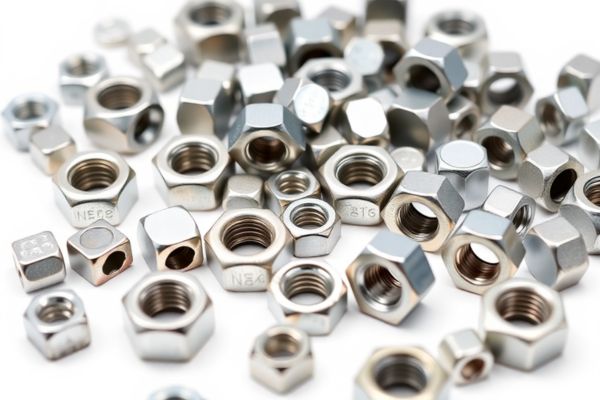
Internally threaded components designed to pair with bolts for secure fastening. Manufactured to provide reliable clamping force.
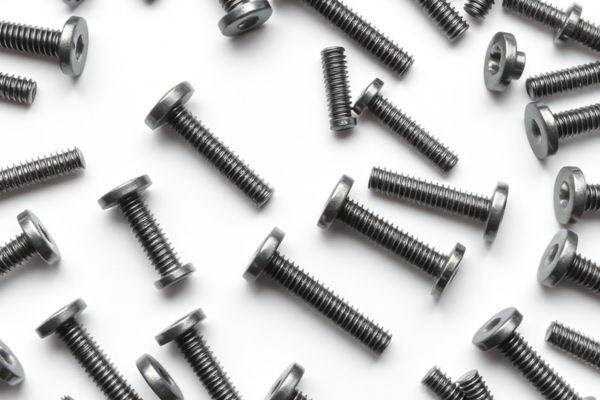
Threaded fasteners engineered for secure fastening into materials like metal, wood, or plastic without the need for a nut.
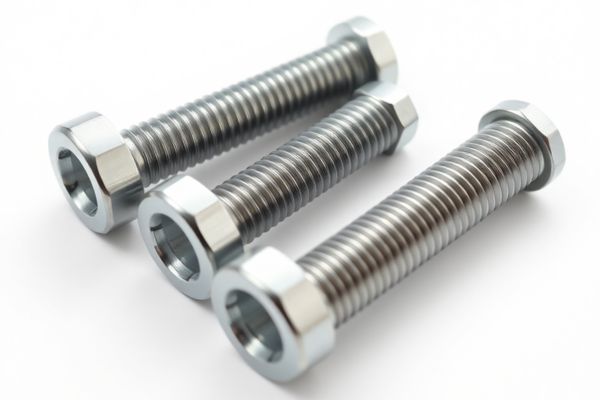
Double-ended threaded fasteners used for flange connections and high-pressure assemblies in industrial applications.
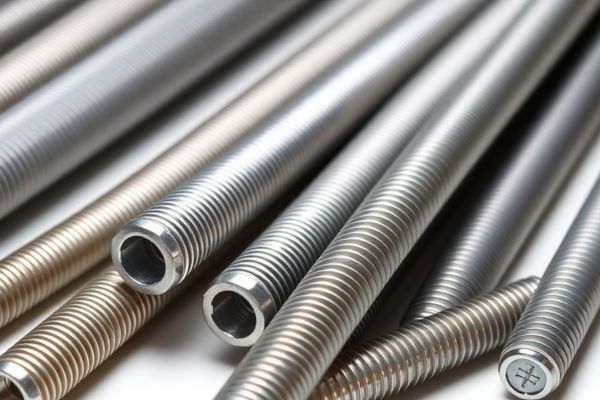
Fully threaded bars designed for adjustable fastening, anchoring, and structural support across various installations.
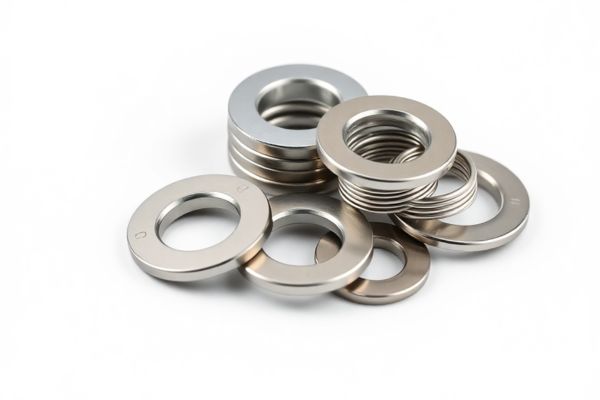
Flat or shaped spacers placed under fasteners to distribute load, reduce wear, and improve joint stability.
| Fastener Type | Common Use |
|---|---|
| Hex Bolts | Securing solar module mounting structures, support frames, and equipment bases |
| Flange Nuts | Used with bolts in solar racking assemblies to provide secure, vibration-resistant joints |
| Stainless Steel Screws | Fastening solar panels, junction boxes, and electrical enclosures in corrosive outdoor environments |
| Threaded Studs | Mounting heavy equipment, inverter supports, and structural connections in renewable energy installations |
| Spring Washers | Helping prevent loosening in wind-exposed solar and renewable energy structures |
| Flat Washers | Distributing load and protecting mounting surfaces in panel and bracket assemblies |
| Anchor Bolts | Fixing solar support structures and equipment foundations to concrete bases |
In solar energy and renewable projects, fasteners must maintain structural integrity under cyclic wind loads, thermal expansion, vibration, and long service exposure. High-strength fasteners are critical for securing panel frames, tracker systems, support structures, and electrical enclosures without loss of clamp force. Precision components help control joint stress, prevent loosening, and support alignment across large arrays. Reliable fastening directly affects safety, energy yield, maintenance intervals, and compliance with project specifications in demanding outdoor environments.
Low-quality fasteners can accelerate corrosion, induce galvanic attack, crack under fatigue, or fail during peak loading, creating shutdowns and costly asset damage. Selection to ASTM requirements, supported by material traceability, torque testing, coating verification, and engineering validation, is essential for performance-critical assemblies. In utility scale installations, proven compliance and consistent manufacturing quality reduce lifecycle risk and preserve long-term reliability. For renewable infrastructure, fastening integrity is an engineering requirement, not a procurement variable.
Stainless Steel
Excellent corrosion resistance and fatigue durability for rooftop arrays, validated in structural fasteners exposed outdoors
Aluminum Alloys
Lightweight thermal stability supports tracker assemblies, where precision components reduce galvanic risk and installation loads
Titanium Alloys
High strength-to-weight and chloride resistance suit offshore wind frames requiring high-strength bolts and low maintenance
Silicon Bronze
Superior atmospheric corrosion resistance performs reliably in grounding hardware, complementing engineered fastening solutions near coastlines
Stainless steel 304 and 316 are common for corrosion resistance, while galvanized structural fasteners suit mounting systems exposed to outdoor weather and humidity.
High strength bolts maintain clamp load under vibration, wind, and thermal cycling, supporting long term reliability in solar structures, trackers, and renewable equipment.
Specify fasteners to ASTM, ISO, or DIN standards to verify strength, coating, and dimensional accuracy for safe installation, durability, and engineering compliance.