
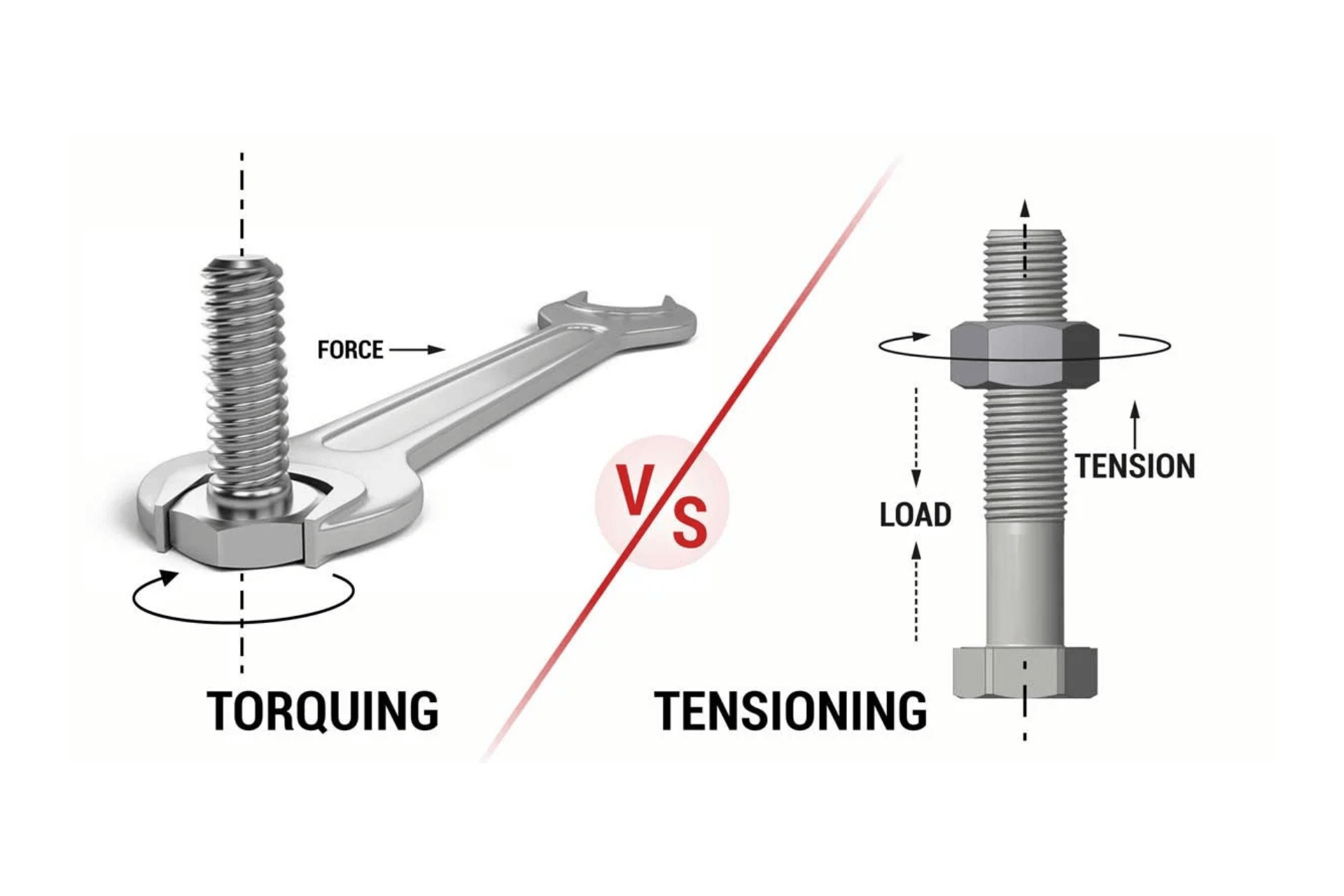
Many fastener failures don’t happen after years of use—they happen the moment a bolt is tightened. One of the most common mistakes in industrial fastening is confusing torque with tension. Understanding the difference is essential for building safe and reliable joints.
At RealBolts, we help industries get fastening right from the installation stage.
Torque Is Only an Indirect Measure
Torque is the rotational force applied when tightening a fastener, but it does not directly measure how much clamping force is generated. Friction at the threads and under the bolt head consumes most of the applied torque.
Changes in lubrication, coating, or surface condition can cause large variations in bolt tension—even when the same torque value is used. This makes torque an imperfect and sometimes risky control method.
Tension Is What Holds the Joint Together
Bolt tension is the actual stretching force in the fastener that clamps components together. Proper tension ensures joint stability, load sharing, and resistance to vibration and fatigue.
Too little tension allows joint separation and loosening, while excessive tension can overstress or permanently deform the fastener. Accurate tension control is critical for joint integrity.
Why Over-Tightening Is Just as Dangerous
Many installers believe tighter is safer, but over-tightening can reduce fastener life. Excessive tension can push the bolt beyond its elastic limit, leading to yielding or delayed failure.
Over-tightened fasteners are also more vulnerable to fatigue cracking, especially in dynamic applications. Controlled tightening protects both the fastener and the joint.
Installation Variables That Affect Results
Thread condition, coating type, lubrication, washer use, and tightening method all influence the torque-tension relationship. Ignoring these factors leads to inconsistent results across identical assemblies.
Standardized installation procedures and proper training help reduce variation and improve reliability. Fastening is a system, not just a bolt.
How RealBolts Supports Proper Fastening
RealBolts provides fasteners designed for consistent performance, along with technical guidance on installation practices. Our focus is on achieving correct tension, not just meeting torque values.
By combining quality fasteners with application knowledge, RealBolts helps reduce installation errors and extend joint service life.
Final Thoughts
Fastener reliability starts during installation. Understanding the difference between torque and tension can prevent premature failures, downtime, and safety risks.
Choosing the right fastener—and tightening it correctly—makes all the difference.