Home » Applications » Fasteners for Construction
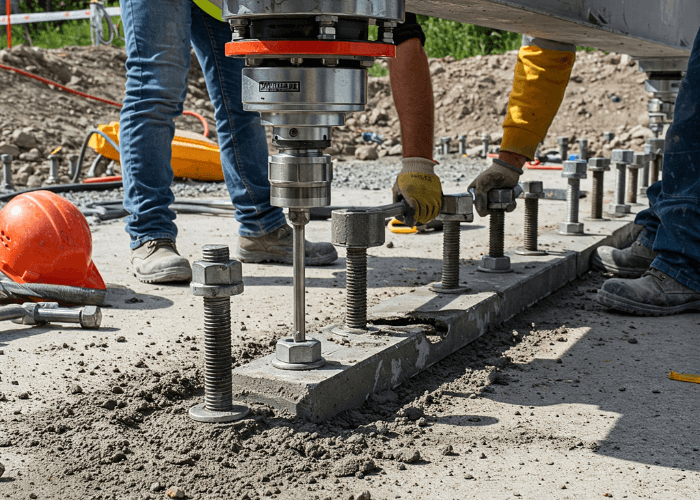
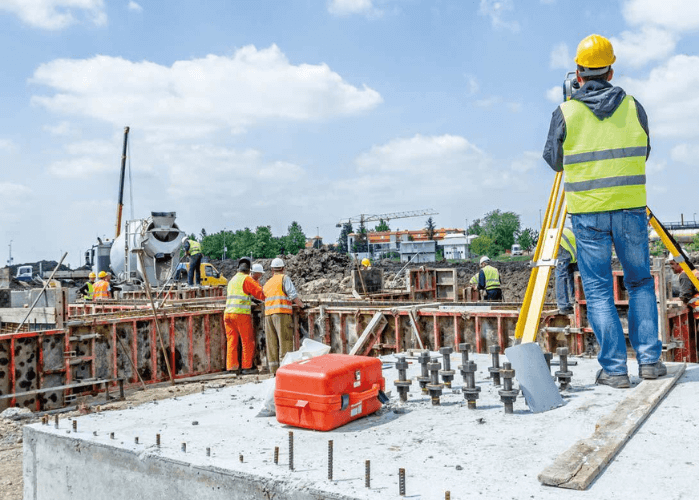
In construction, application-specific fasteners secure steel members, concrete anchors, façade systems, roofing, and supports, converting design intent into joints. These industrial fasteners control clamp force, maintain alignment, and transfer shear and tensile forces across assemblies. Structural fasteners and engineered fastening solutions are essential to build integrity and serviceability.
Construction assemblies face shifting load distribution, wind uplift, vibration, impact, and settlement, while thermal expansion in dissimilar materials can reduce preload. Outdoor structures see moisture, chlorides, and corrosion exposure, requiring protective finishes or stainless alloys. High-strength bolts with fatigue resistance help joints sustain repeated stress without loosening or fracture.
Construction reliability depends on fasteners meeting ISO, ASTM and DIN requirements, with traceability and dimensional inspection. Preload testing, torque verification, and coating checks provide engineering validation for installation. These industrial fastening systems serve as performance-critical components where documented compliance and tested quality are mandatory.

Threaded fasteners designed for strong mechanical joints across structural and industrial assemblies.
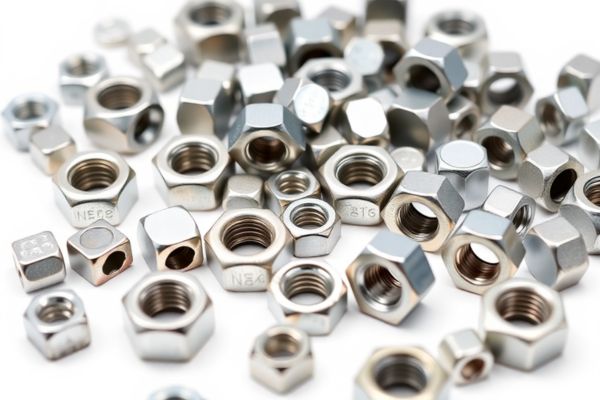
Internally threaded components designed to pair with bolts for secure fastening. Manufactured to provide reliable clamping force.
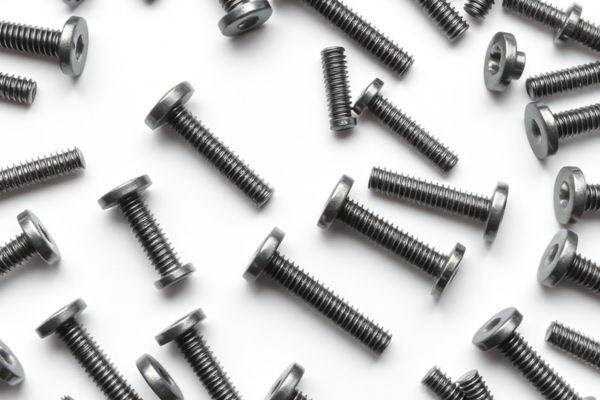
Threaded fasteners engineered for secure fastening into materials like metal, wood, or plastic without the need for a nut.
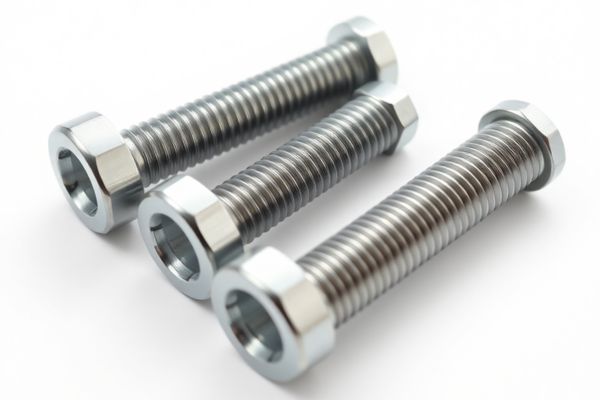
Double-ended threaded fasteners used for flange connections and high-pressure assemblies in industrial applications.
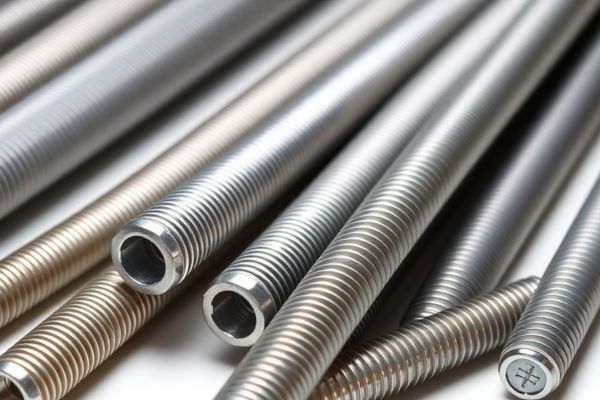
Fully threaded bars designed for adjustable fastening, anchoring, and structural support across various installations.
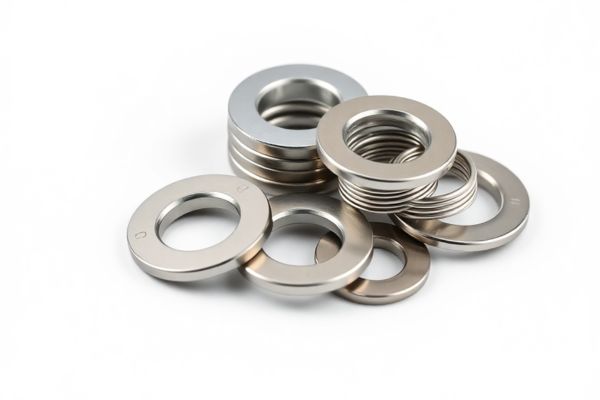
Flat or shaped spacers placed under fasteners to distribute load, reduce wear, and improve joint stability.
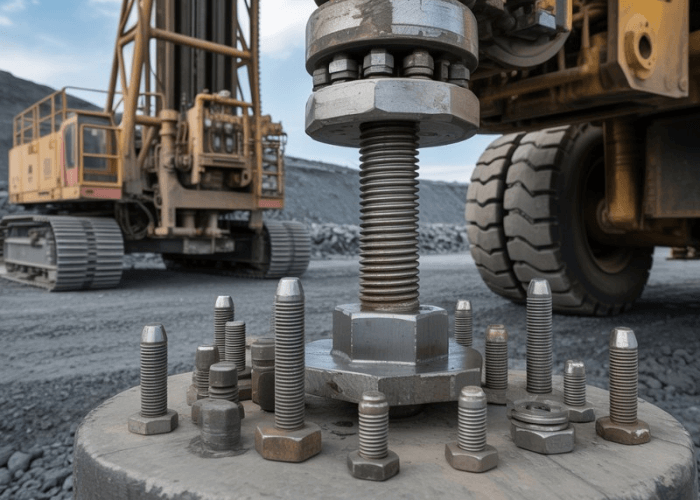
| Fastener Type | Common Use |
|---|---|
| Structural Bolts | Connecting steel beams, columns, and other structural steel members in buildings and bridges |
| Anchor Bolts | Securing structural columns, base plates, and equipment to concrete foundations |
| Hex Head Cap Screws | General steel-to-steel and metal component fastening in construction assemblies |
| Threaded Rods / Stud Bolts | Suspending HVAC, piping, cable trays, and supporting framework installations |
| Heavy Hex Nuts | Used with structural and anchor bolts for high-strength construction joints |
| Flat Washers | Distributing load under bolt heads and nuts to protect connected surfaces |
| Self-Drilling Screws | Fastening metal roofing, cladding, and light-gauge steel sections without pre-drilling |
In construction, fasteners directly affect structural integrity, occupant safety, and long term service life. Connections in steel frames, concrete embeds, cladding systems, and heavy equipment supports must withstand static loads, vibration, wind uplift, and thermal movement without loosening or fracture. High strength fasteners and precision components help maintain preload, resist stress concentration, and support predictable load transfer. Selecting verified materials and correct geometries is also essential for code compliance, corrosion resistance, and reliable field performance.
Low quality fasteners can introduce thread deformation, inconsistent hardness, coating failure, and premature fatigue, leading to joint slip, cracking, or progressive connection failure under repeated loading. For construction projects, specification to ASTM standards, backed by mechanical testing, traceability, and engineering validation, reduces these risks and supports compliance across critical assemblies. Performance critical fastening systems must be matched to substrate, environment, and design load to ensure dependable installation and lifecycle reliability. In structural construction, fastener quality is an engineering control, not a procurement detail.
Carbon Steel
High tensile strength supports structural frames and concrete anchors, proven for high-strength bolts in buildings.
Stainless Steel
Excellent corrosion resistance suits exterior cladding and bridge assemblies, ensuring reliable structural fasteners in exposed zones.
Silicon Bronze
Superior atmospheric corrosion resistance benefits roofing and facade systems, validated for precision components in coastal construction.
Titanium Alloy
Exceptional strength-to-weight performance suits seismic connections and facade systems, trusted for engineered fastening solutions under load.
Carbon steel, alloy steel, and stainless steel are common. ASTM A325 and A490 high-strength bolts are widely specified for structural fasteners in demanding construction environments.
High-strength bolts deliver reliable clamp load, shear strength, and fatigue resistance. They support structural stability in steel framing, bridges, and heavy-load construction assemblies.
Select fasteners by load, corrosion exposure, and joint type. Use ISO, DIN, or SAE specifications to match structural performance, coating requirements, and installation conditions.