Home » Applications » Fasteners for Hardware Fittings
Hardware fittings depend on application-specific fasteners to secure hinges, handles, brackets, and locks with clamp load and positioning. Industrial fasteners for assemblies must match thread form, head style, and material to prevent loosening or distortion. Structural fasteners and precision components support alignment and installation in hardware.
Hardware fittings face load distribution changes, vibration, cyclic motion, thermal expansion between parts, and corrosion exposure from humidity or service. Correct diameter, grip length, pitch, and coating control bearing stress, preload loss, and wear. High-strength bolts with fatigue resistance are used where movement or impact can reduce joint stability.
Reliability requires traceable materials, controlled dimensions, and engineering validation to ISO, ASTM, DIN, or SAE criteria. Fasteners are verified through torque-tension testing, hardness checks, and corrosion evaluation. These controls strengthen industrial fastening systems used as performance-critical components in hardware fittings where safety and maintenance intervals are managed.

Threaded fasteners designed for strong mechanical joints across structural and industrial assemblies.
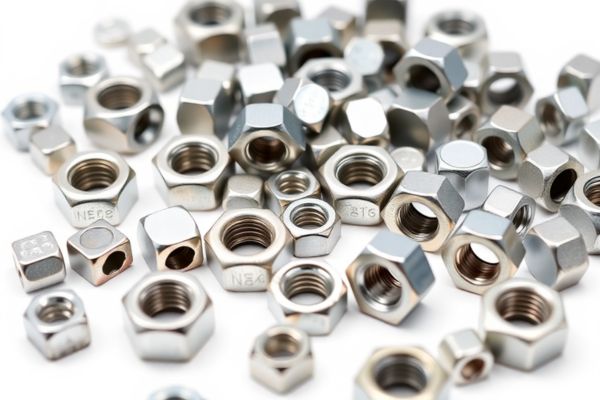
Internally threaded components designed to pair with bolts for secure fastening. Manufactured to provide reliable clamping force.
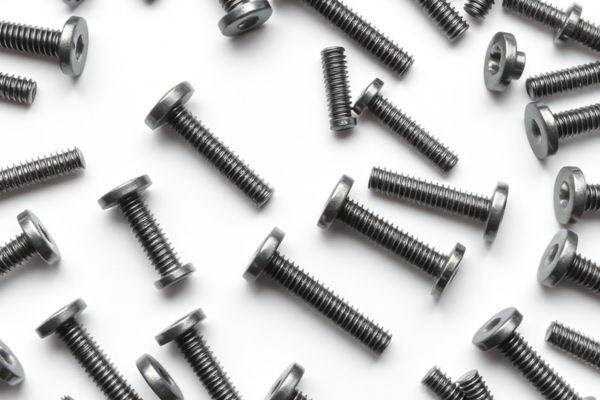
Threaded fasteners engineered for secure fastening into materials like metal, wood, or plastic without the need for a nut.
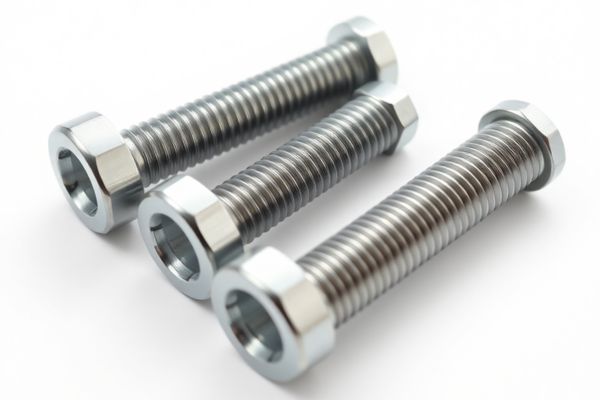
Double-ended threaded fasteners used for flange connections and high-pressure assemblies in industrial applications.
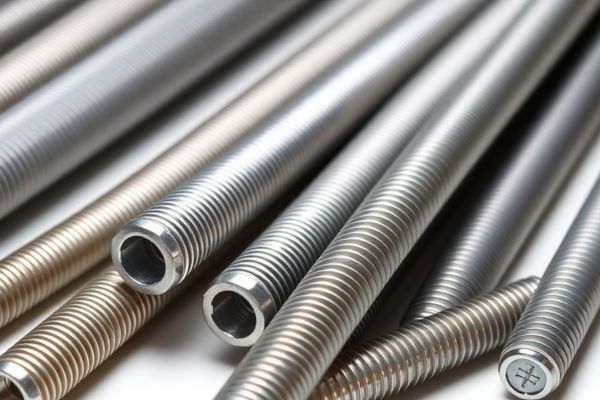
Fully threaded bars designed for adjustable fastening, anchoring, and structural support across various installations.
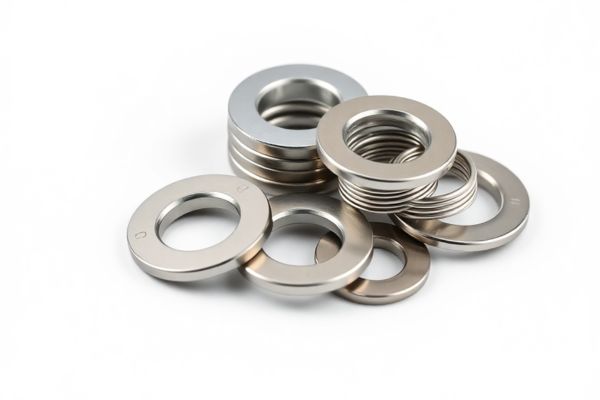
Flat or shaped spacers placed under fasteners to distribute load, reduce wear, and improve joint stability.

| Fastener Type | Common Use |
|---|---|
| Machine Screws | Securing hinges, handles, brackets, and lock assemblies in metal and hardware fittings. |
| Self-Tapping Screws | Fastening sheet metal hardware components where threads are formed directly in the base material. |
| Hex Bolts | Joining structural hardware fittings, mounting plates, and heavy-duty support brackets. |
| Stud Bolts | Used in fixed hardware assemblies requiring secure clamping with nuts on both ends. |
| Hex Nuts | Paired with bolts and studs to lock hardware fittings in place in mechanical and structural assemblies. |
| Flat Washers | Distributing load under bolt heads and nuts to protect hardware surfaces and improve joint stability. |
| Spring Washers | Providing tension to resist loosening in vibrating hardware fitting installations. |
In hardware fittings, fasteners carry repeated loads, clamp dissimilar materials, and preserve alignment under vibration, torque, and thermal movement. High quality fasteners are therefore essential to safety, durability, and predictable service life. Correct material grade, thread accuracy, and coating performance directly affect structural integrity, pull out resistance, and corrosion behavior. In hinges, brackets, locks, rails, and mounting assemblies, high-strength fasteners and precision components help prevent loosening, deformation, and premature failure while supporting compliance with engineering and installation requirements.
Low quality fasteners can introduce thread stripping, uneven preload, galvanic attack, and sudden fracture, especially where hardware fittings face cyclic stress or outdoor exposure. To control these risks, manufacturers should verify dimensional consistency, mechanical properties, and surface treatment against standards such as ISO 898. Engineering validation, traceable compliance records, and batch testing confirm that each fastening point delivers reliable load transfer and long term performance. For performance-critical fittings, specified and tested fasteners are a design necessity, not a procurement afterthought.
Brass Alloy
Corrosion-resistant and conductive, ideal for decorative hardware fittings and precision components requiring dependable repeated assembly.
Titanium Alloy
Exceptional strength-to-weight and fatigue resistance support high-load hardware fittings with validated engineered fastening solutions.
Nylon Polymer
Non-conductive and vibration-damping, suited for lightweight hardware fittings and precision components in electrical enclosures.
Aluminum Bronze
Excellent wear and marine corrosion resistance for hardware fittings used in harsh environments and structural fasteners.
Stainless steel, alloy steel, and brass are common. For corrosion resistance and load capacity, engineers often specify high-strength bolts in ASTM or DIN grades.
Precision fasteners deliver clamp load, vibration resistance, and durability. Proper coating, thread design, and tensile class improve reliability in repeated assembly and structural service.
Key standards include ISO, ASTM, SAE, and DIN. Selection depends on load, environment, corrosion exposure, thread type, and required mechanical performance.