Home » Applications » Fasteners for Marine
Marine fasteners secure hull sections, deck fittings, propulsion mounts, piping brackets, and equipment where integrity is critical. In these assemblies, they serve as industrial fasteners that clamp dissimilar materials, preserve alignment, and transfer loads. Structural fasteners and precision components are specified to control sealing, torque, and galvanic interaction in saltwater service.
Service conditions involve cyclic load distribution, wave and engine vibration, thermal expansion, and corrosion exposure from salt spray and immersion. Marine fasteners must resist crevice attack, thread wear, and preload loss while sustaining shock motion. High-strength bolts with fatigue resistance are specified for critical joints under repeated stress reversals and dynamic loading.
Reliability depends on traceable materials, dimensional control, and validation to ISO and ASTM requirements, with DIN references used when specified. Performance-critical components are qualified by mechanical testing, corrosion evaluation, and inspection of threads, hardness, and coating integrity. This supports fastening systems for assemblies where safety and service life are mandatory.

Threaded fasteners designed for strong mechanical joints across structural and industrial assemblies.
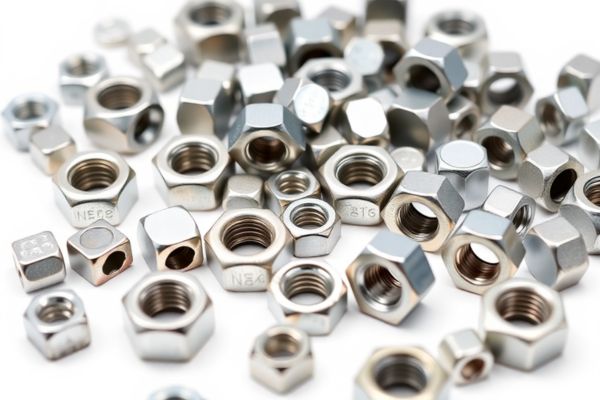
Internally threaded components designed to pair with bolts for secure fastening. Manufactured to provide reliable clamping force.
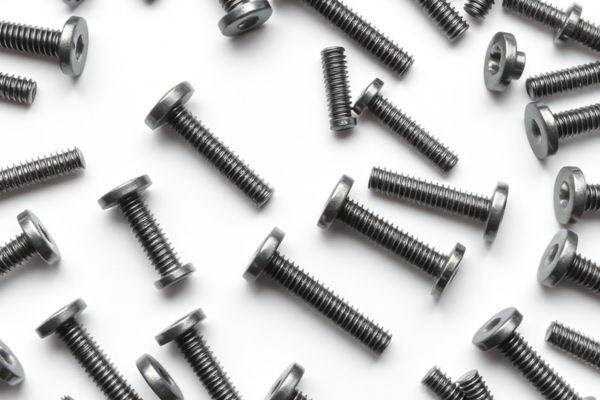
Threaded fasteners engineered for secure fastening into materials like metal, wood, or plastic without the need for a nut.
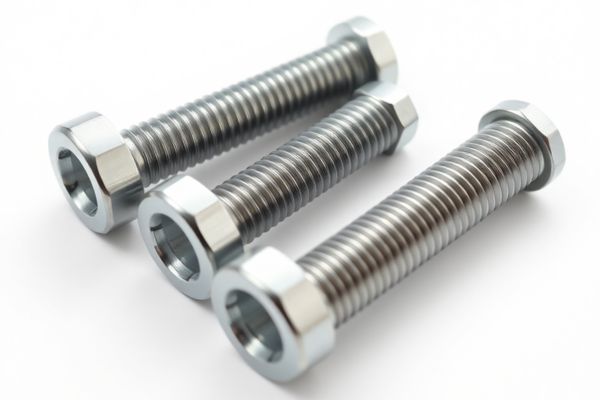
Double-ended threaded fasteners used for flange connections and high-pressure assemblies in industrial applications.
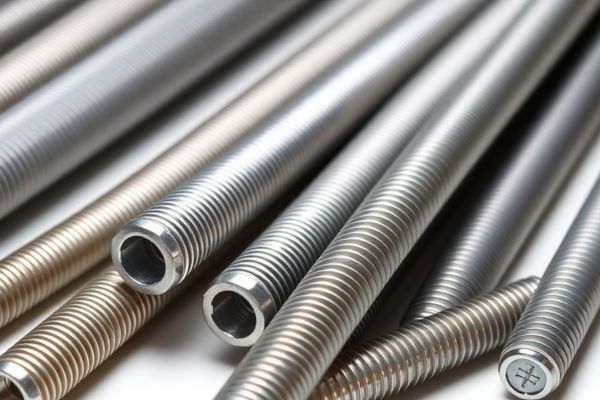
Fully threaded bars designed for adjustable fastening, anchoring, and structural support across various installations.
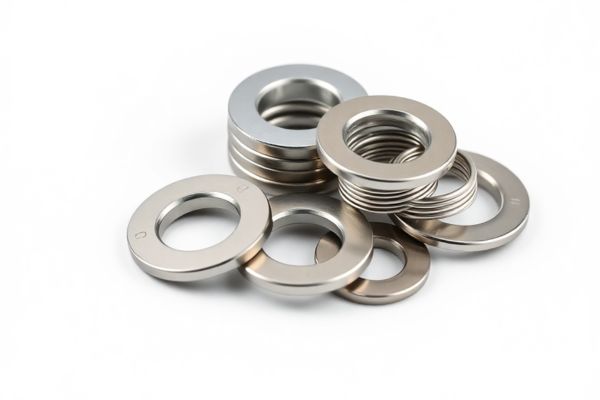
Flat or shaped spacers placed under fasteners to distribute load, reduce wear, and improve joint stability.
| Fastener Type | Common Use |
|---|---|
| Hex Bolts | Securing structural steel, deck hardware, and marine equipment assemblies |
| Stud Bolts | Flanged connections in marine piping systems, pumps, and valves |
| Machine Screws | Mounting electrical panels, navigation equipment, and interior fittings |
| Socket Head Cap Screws | Fastening compact engine, gearbox, and propulsion system components |
| Hex Nuts | Used with bolts and studs in hull structures, machinery, and onboard equipment |
| Lock Nuts | Preventing loosening in vibration-prone marine engines and rotating machinery |
| Flat Washers | Distributing load and protecting surfaces in deck, hull, and equipment installations |
In marine systems, fasteners face cyclic loads, vibration, saltwater exposure, and galvanic attack while retaining clamp force. High quality fasteners are critical to structural integrity in hull joints, deck equipment, and propulsion assemblies, where small losses in preload can trigger leakage, fatigue, or detachment. High strength fasteners and precision components improve stress control, corrosion resistance, and service reliability under continuous motion.
Low quality fasteners can pit, seize, crack, or loosen early, creating safety hazards, unplanned shutdowns, and costly rework. Selection should meet ASTM requirements and be supported by compliance records, corrosion testing, torque verification, and engineering validation of material compatibility. For performance critical marine equipment, documented reliability and standards based fastening practice are mandatory engineering controls.
Titanium Alloy
Exceptional corrosion resistance and fatigue strength for seawater-exposed hull assemblies, validated in critical precision components.
Silicon Bronze
Nonmagnetic corrosion resistance suits deck hardware and electrical fittings, proven for durable engineered fastening solutions.
Monel 400
Outstanding seawater corrosion resistance and toughness support pump, valve, and propeller systems using structural fasteners.
Duplex Steel
High strength and chloride stress resistance perform reliably in offshore structural joints with high-strength bolts.
316 stainless steel and duplex alloys are preferred for marine fasteners due to chloride resistance, durability, and reliable performance in saltwater and offshore structural fasteners applications.
High-strength bolts perform well when paired with corrosion-resistant coatings or alloys, reducing galvanic attack, maintaining preload, and supporting long-term reliability under vibration and cyclic loading.
Key standards include ASTM F593, ISO 3506, and DIN specifications, helping engineers verify material grade, corrosion resistance, strength class, and suitability for marine industrial fasteners.