Home » Applications » Fasteners for Shipbuilding
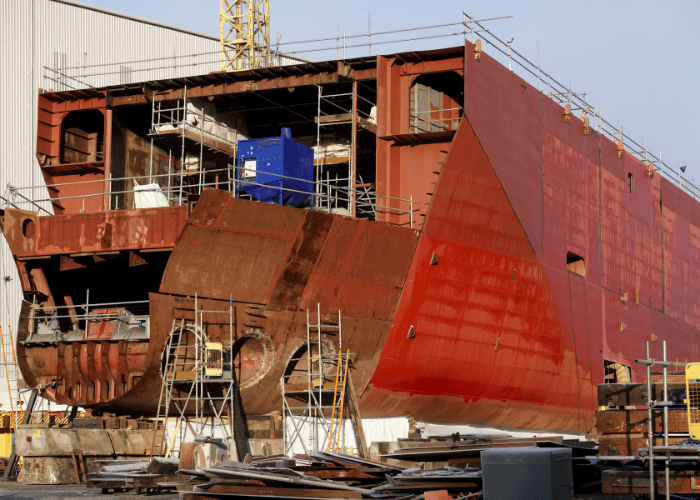
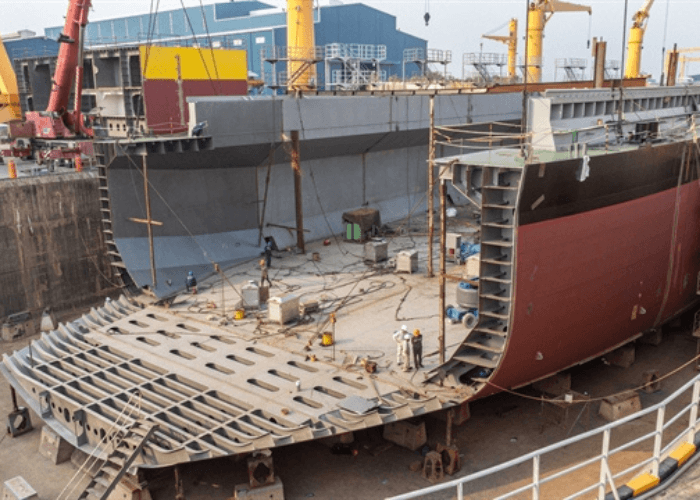
In shipbuilding, fasteners secure hull sections, deck structures, propulsion supports, piping brackets, machinery foundations, and interior modules into unified assemblies. Shipbuilding fasteners and industrial fasteners maintain clamp load across welded and bolted joints where alignment, service access, and replaceability are critical. These structural fasteners function as precision components within engineered fastening solutions that support dimensional stability, joint integrity, and safe transfer of static and dynamic loads throughout the vessel.
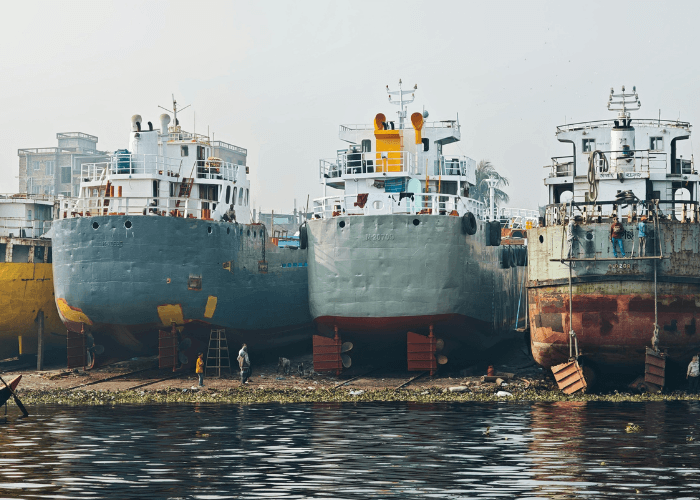
Marine service subjects joints to cyclic wave loading, engine-induced vibration, impact, thermal expansion, and continuous corrosion exposure from saltwater, humidity, and dissimilar-metal contact. Effective selection must consider load distribution, preload retention, thread engagement, and sealing performance under fluctuating temperatures and mechanical shock. High-strength bolts with verified fatigue resistance are required to withstand repeated stress reversals, minimize loosening, and preserve connection reliability in machinery spaces, topside structures, and submerged equipment interfaces.
For performance-critical ship assemblies, fasteners are specified through material traceability, torque-tension verification, coating qualification, and documented engineering validation. Compliance with ISO and ASTM requirements, with dimensional references to DIN where applicable, supports interchangeability and controlled installation practices. Tested industrial fastening systems are evaluated for corrosion behavior, tensile capacity, hardness, and proof load, helping shipbuilders deploy performance-critical components that satisfy class expectations and long-term maintenance demands.

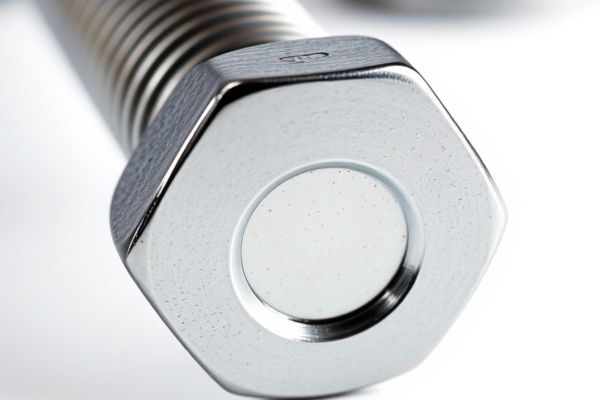
Threaded fasteners designed for strong mechanical joints across structural and industrial assemblies.
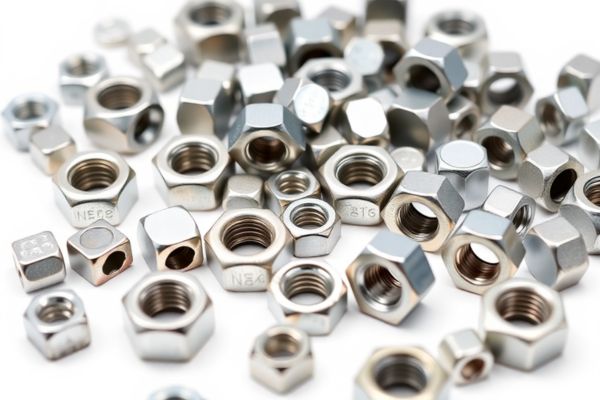
Internally threaded components designed to pair with bolts for secure fastening. Manufactured to provide reliable clamping force.
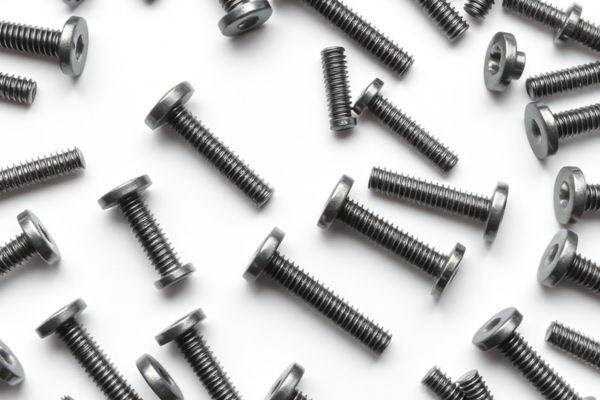
Threaded fasteners engineered for secure fastening into materials like metal, wood, or plastic without the need for a nut.
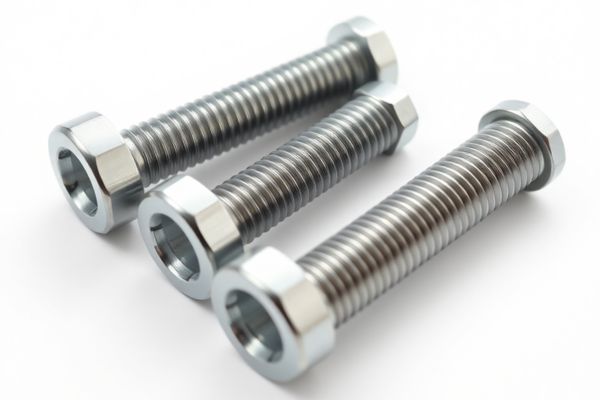
Double-ended threaded fasteners used for flange connections and high-pressure assemblies in industrial applications.
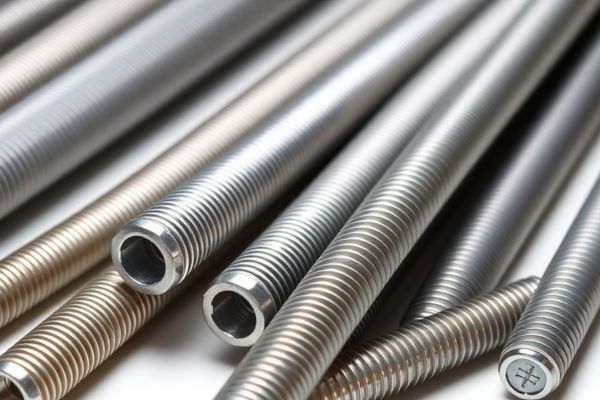
Fully threaded bars designed for adjustable fastening, anchoring, and structural support across various installations.
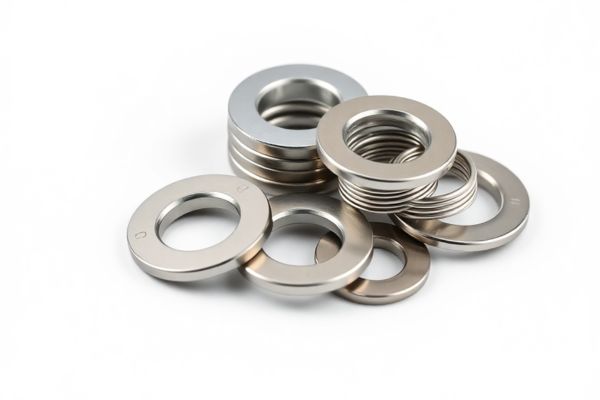
Flat or shaped spacers placed under fasteners to distribute load, reduce wear, and improve joint stability.
| Fastener Type | Common Use |
|---|---|
| Hex Bolts | Structural steel connections, deck fittings, and machinery mounting |
| Stud Bolts | Flanged joints in piping systems, pumps, valves, and engine components |
| Hex Nuts | Used with bolts and studs in hull structures, equipment assemblies, and pipe flanges |
| Flat Washers | Load distribution and surface protection in bolted joints on marine structures and equipment |
| Socket Head Cap Screws | Compact fastening in onboard machinery, engine systems, and mechanical assemblies |
| U-Bolts | Securing pipes, tubes, and cable trays to shipboard supports |
| Anchor Bolts | Fixing heavy equipment and machinery bases to shipyard foundations and support structures |
In shipbuilding, fasteners secure hull sections, decks, propulsion systems, piping, and offshore equipment exposed to cyclic loads, vibration, saltwater, and thermal variation. High quality fasteners are essential to structural integrity, fatigue resistance, and leak tight assembly performance. Precision components with verified preload help prevent joint loosening, corrosion driven failure, and costly safety incidents at sea.
Low grade fasteners can crack under shock loading, lose clamp force through poor tolerances, or accelerate galvanic attack in marine service. Specifying products to ASTM requirements, supported by material traceability, corrosion testing, and engineering validation, reduces failure risk in performance critical joints. For shipyards and marine OEMs, standards compliant fasteners are a non negotiable reliability decision.
Stainless Steel
Excellent corrosion resistance supports deck hardware and hull assemblies, with validated precision components for marine service.
Titanium Alloy
High strength-to-weight performance suits offshore superstructures and propulsion zones, using engineered fastening solutions for durability.
Bronze Alloy
Superior seawater corrosion resistance benefits propeller shafts and underwater fittings, proven structural fasteners for longevity.
Monel Alloy
Outstanding fatigue resistance handles saline piping and pump systems, with certified high-strength bolts for reliability.
316 stainless steel, duplex stainless, and alloy steel are widely used for shipbuilding fasteners, balancing corrosion resistance, strength, and durability in saltwater structural applications.
High strength bolts maintain joint integrity under vibration, cyclic loading, and wave impact, helping structural fasteners perform reliably in demanding marine engineering environments.
ISO, ASTM, and DIN standards help verify dimensions, mechanical properties, and corrosion performance, supporting correct fastener selection for critical shipbuilding assemblies.