Home » Applications » Fasteners for Mining & Earthmoving Equipment
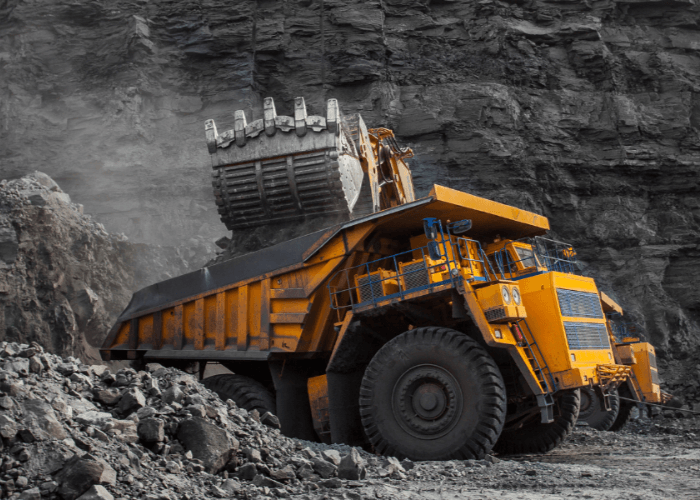
In mining and earthmoving equipment, application-specific fasteners secure frames, buckets, booms, undercarriage sections, and hydraulic joints under repeated shock. These industrial fasteners preserve clamp load and joint stability across welded structures and assemblies. Structural fasteners and precision components support alignment, wear control, and force transfer in connections.
Operating conditions combine impact, vibration, abrasive debris, moisture, and temperature variation. Fasteners must manage load distribution, accommodate thermal expansion, resist loosening, and limit slip under cyclic loads. Corrosion exposure from slurry, washdown, and chemicals accelerates degradation, so high-strength bolts with fatigue resistance are required in service.
Reliability depends on verified metallurgy, controlled threads, and selection to ISO 898-1, ASTM, DIN or SAE requirements. Engineering validation through torque-tension testing, hardness checks, and coating assessment confirms suitability for performance-critical components within industrial fastening systems. Compliance-based specification reduces maintenance risk and supports safe service intervals.

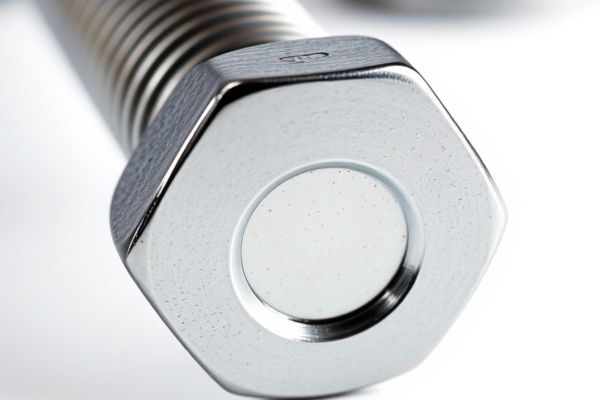
Threaded fasteners designed for strong mechanical joints across structural and industrial assemblies.
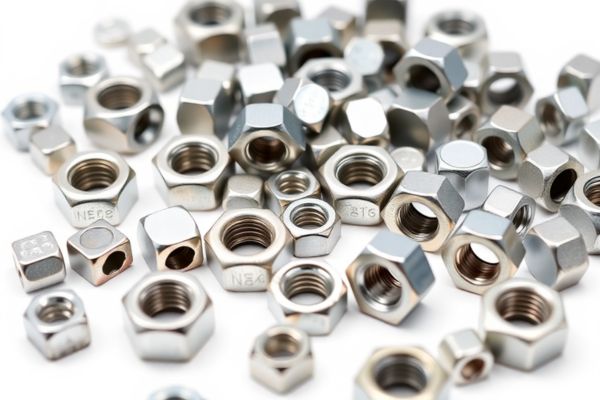
Internally threaded components designed to pair with bolts for secure fastening. Manufactured to provide reliable clamping force.
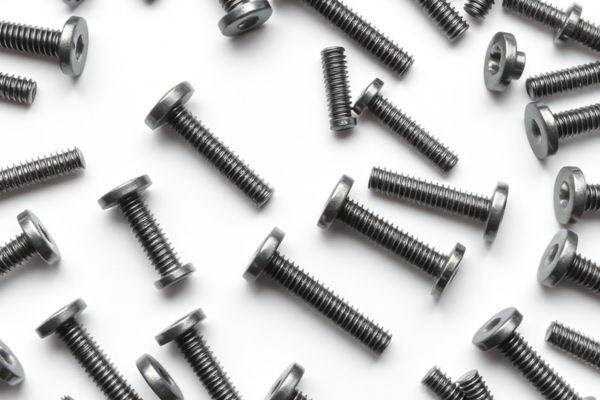
Threaded fasteners engineered for secure fastening into materials like metal, wood, or plastic without the need for a nut.
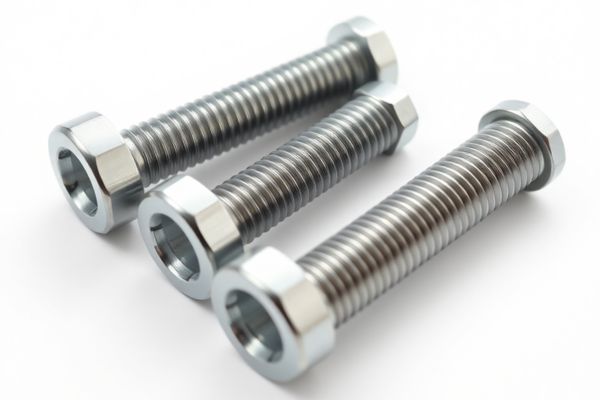
Double-ended threaded fasteners used for flange connections and high-pressure assemblies in industrial applications.
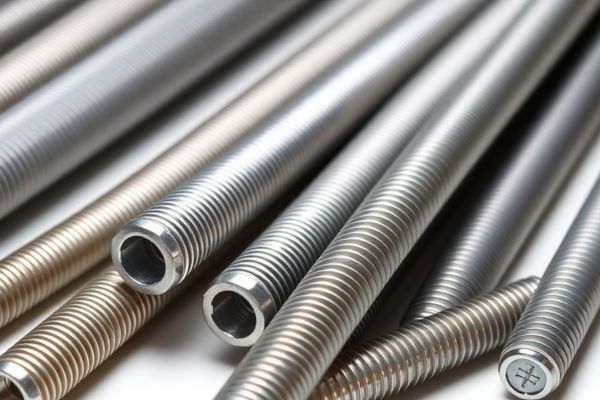
Fully threaded bars designed for adjustable fastening, anchoring, and structural support across various installations.
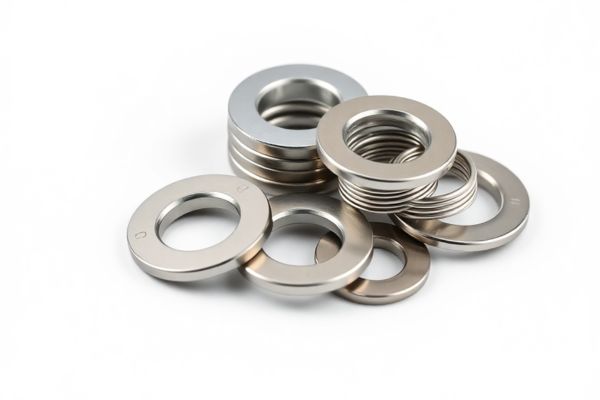
Flat or shaped spacers placed under fasteners to distribute load, reduce wear, and improve joint stability.
| Fastener Type | Common Use |
|---|---|
| High-Strength Hex Bolts | Securing structural frames, boom sections, and heavy equipment assemblies on excavators, loaders, and dump trucks |
| Stud Bolts | Fastening engine, gearbox, hydraulic, and flange-mounted components where high clamping force and serviceability are required |
| Socket Head Cap Screws | Mounting compact hydraulic components, wear parts, and precision-machined assemblies in confined equipment spaces |
| U-Bolts | Clamping pipes, hydraulic lines, axle components, and support brackets on mining and earthmoving machinery |
| Lock Nuts | Preventing loosening in high-vibration applications such as suspension systems, track assemblies, and rotating equipment |
| Hardened Flat Washers | Distributing load under bolt heads and nuts in heavy-duty joints to protect surfaces and maintain clamp integrity |
| Spring Washers | Providing additional resistance to loosening in vibrating joints on guards, brackets, and auxiliary equipment mounts |
In mining and earthmoving equipment, fasteners carry sustained vibration, shock loading, abrasive contamination, and heavy cyclic stress across frames, buckets, undercarriages, and hydraulic assemblies. High quality fasteners are critical to structural integrity, operator safety, and machine uptime because joint failure can escalate quickly under dynamic loads. Engineered high strength fasteners and precision components maintain clamp force, resist loosening, and support predictable performance in demanding duty cycles while helping OEMs and operators meet safety and service requirements.
Low quality fasteners can suffer thread deformation, loss of preload, corrosion attack, and fatigue cracking, creating risks of misalignment, component separation, and unplanned shutdowns in severe field conditions. Compliance with ISO standards, supported by material traceability, torque verification, and engineering validation, is essential for performance critical joints. Real world reliability depends on tested metallurgy, dimensional accuracy, and documented quality control, because in mining equipment fastening integrity is a primary engineering safeguard.
Alloy Steel
Provides exceptional tensile strength and fatigue resistance for haul truck chassis joints using high-strength bolts in proven service
Carbon Steel
Offers impact toughness and wear resistance for bucket linkages and track assemblies using structural fasteners
Titanium Alloy
Combines low density, corrosion resistance, and fatigue life for hydraulic systems using qualified precision components
Nickel Alloy
Maintains thermal stability and corrosion resistance in turbocharged engine manifolds with validated structural fasteners
Alloy steel and ASTM A193 grades are common for high-strength bolts, while zinc nickel or phosphate coatings improve corrosion resistance in abrasive, wet mining conditions.
Structural fasteners with controlled preload resist loosening under impact, cyclic loads, and vibration. Proper torque, thread engagement, and hardened washers improve joint reliability.
Select by load, joint design, environment, and service access. Verify ISO or DIN requirements, material grade, coating, and fatigue performance for critical equipment connections.