
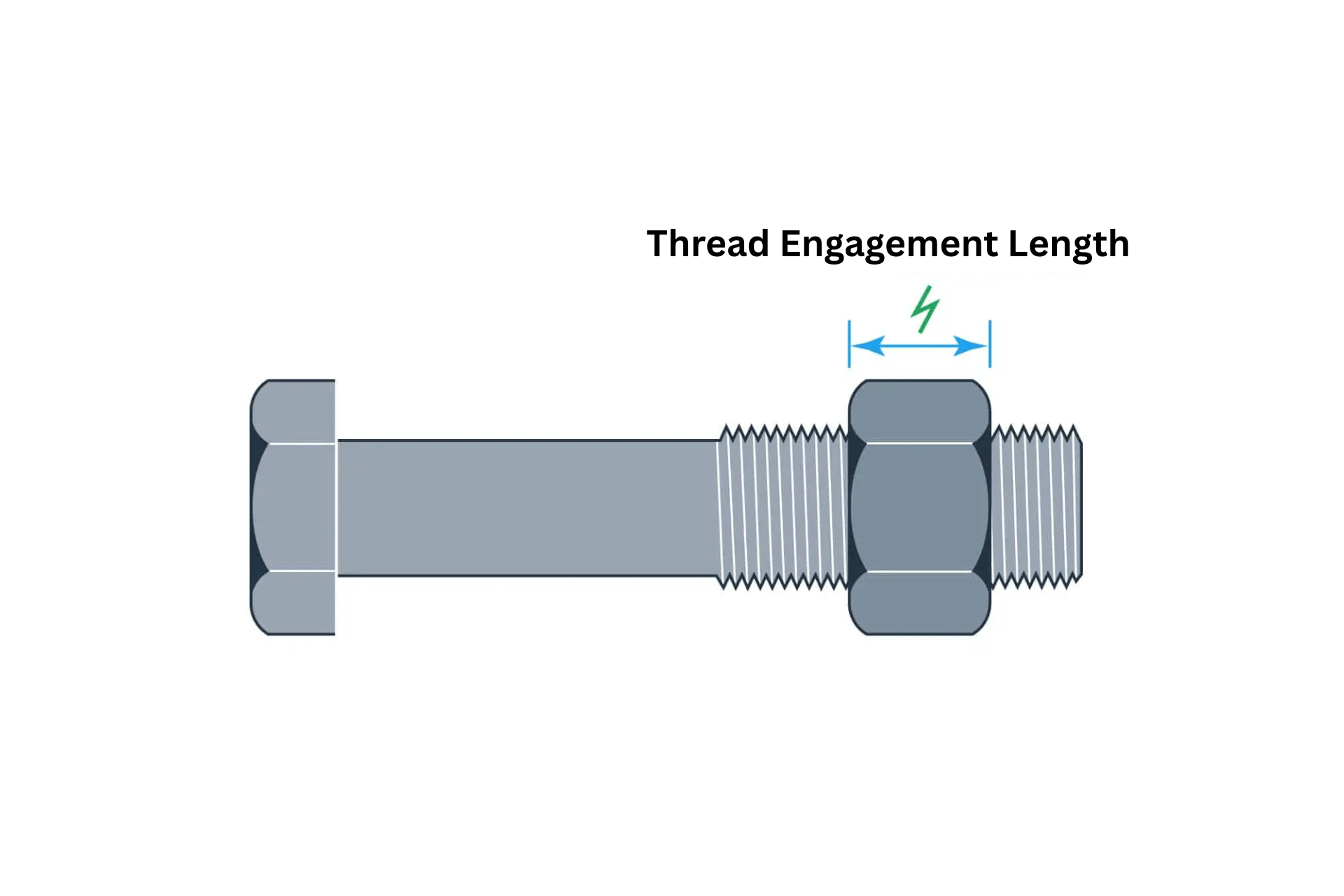
When a bolted joint fails, the bolt often gets the blame. In reality, many failures begin in the threads—specifically from insufficient or incorrect thread engagement. Thread engagement determines how load is transferred between the bolt and the nut or tapped hole, making it one of the most critical factors in fastener performance.
At RealBolt, thread engagement is treated as a design requirement, not an afterthought.
What Thread Engagement Really Means
Thread engagement refers to the length of thread overlap between the fastener and its mating part. This engagement allows the load applied to the bolt to be distributed across multiple threads instead of being concentrated in one area.
When engagement is insufficient, the first few threads carry most of the load. This causes localized stress, leading to thread stripping, deformation, or sudden joint failure—even when the bolt itself is strong enough.
Correct engagement ensures even load sharing and structural stability.
Why More Threads Do Not Always Mean More Strength
While it may seem logical that more engagement always improves strength, excessive engagement can introduce its own problems. Over-engagement can increase friction during tightening, making it difficult to achieve accurate preload.
In some cases, too much engagement can also complicate removal or increase the risk of galling, especially with stainless steel fasteners. Engineers aim for optimal—not maximum—engagement based on material and load conditions.
Balance is key to reliable fastening.
Material Compatibility and Thread Failure
Thread engagement effectiveness depends heavily on the relative strength of the bolt and the mating material. For example, steel bolts threaded into aluminum or cast iron require greater engagement length to prevent thread stripping.
Ignoring material compatibility leads to failures where the bolt remains intact but the internal threads fail. Proper engagement compensates for weaker materials and protects the joint.
Thread design must always consider the mating material.
The Role of Manufacturing Precision
Accurate thread geometry is essential for proper engagement. Poorly formed threads reduce contact area and increase stress concentration, accelerating wear and failure.
RealBolt fasteners are manufactured with precise thread profiles to ensure full, even contact between mating threads. This precision improves load distribution and joint reliability.
Thread quality is just as important as bolt strength.
How RealBolt Ensures Reliable Thread Engagement
RealBolt fasteners are designed and supplied with controlled thread dimensions, verified materials, and application-based recommendations. This ensures optimal engagement across a wide range of industrial uses.
By focusing on this often-overlooked detail, RealBolt helps customers achieve stronger joints, longer service life, and improved safety.