
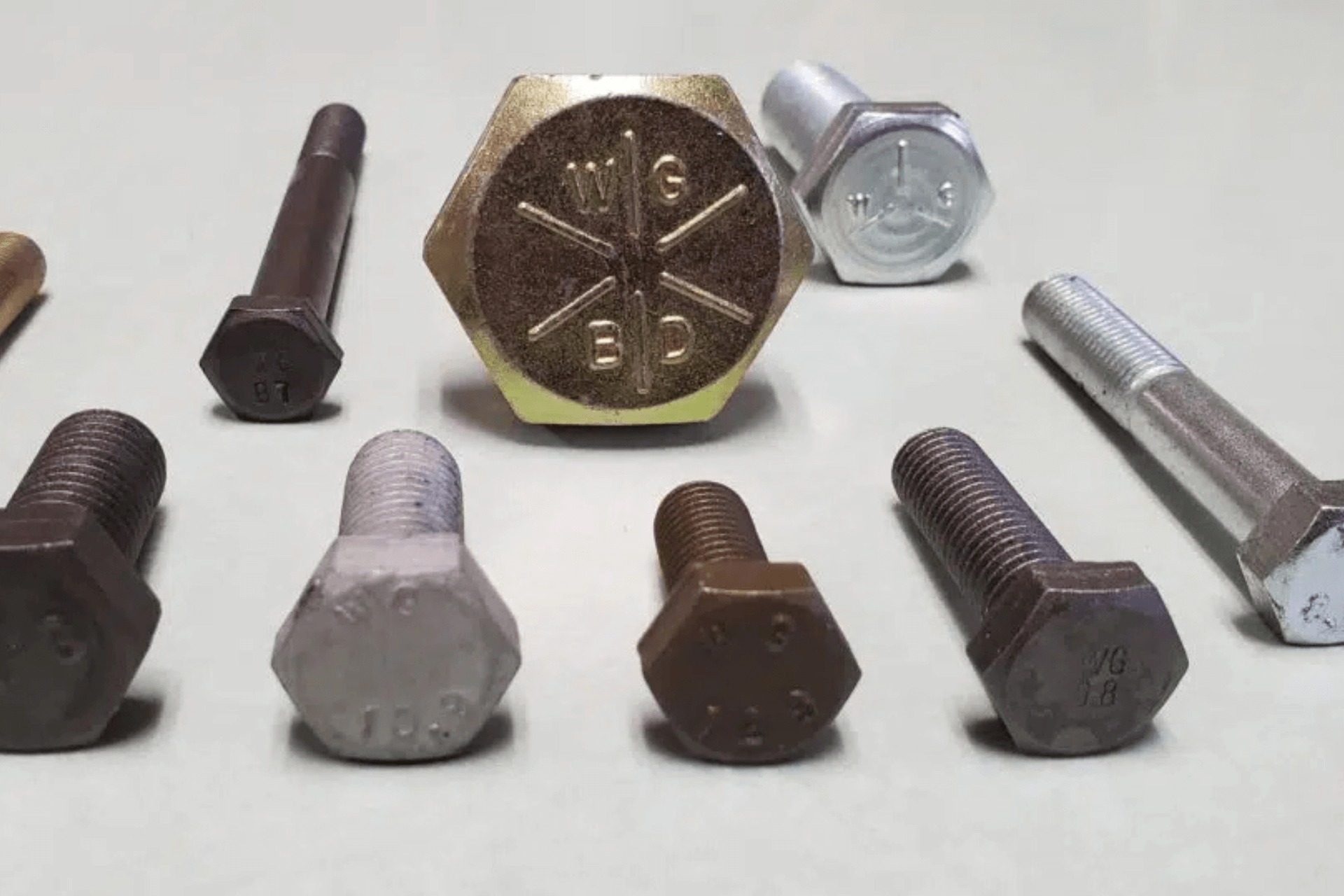
In industrial projects, fastener grades are often treated as a guarantee of performance. If two bolts share the same grade marking, they are expected to behave the same under load. In reality, this assumption can be misleading. Bolts with identical grades can perform very differently in real-world applications.
At RealBolts, we help industries understand why grade markings are only part of the performance story.
Fastener Grade Defines Limits, Not Quality
A fastener grade specifies minimum mechanical properties such as tensile strength, yield strength, and hardness. It sets a baseline performance requirement but does not control how consistently those properties are achieved.
Two bolts may both meet the minimum grade requirement, yet one may be manufactured close to the lower limit while another exceeds it. This difference can significantly affect fatigue life, preload behavior, and long-term reliability.
Grade alone does not guarantee identical performance.
Material Quality Makes a Major Difference
The chemical composition of steel plays a critical role in how a bolt behaves under load. Variations in carbon content, alloying elements, or impurities can affect strength, ductility, and fatigue resistance.
Even when bolts meet the same grade, inconsistent raw material quality can lead to unpredictable performance. High-quality steel provides better resistance to cracking, deformation, and long-term wear.
Material control is a key differentiator in fastener reliability.
Heat Treatment and Process Control
Heat treatment determines the internal structure of a bolt and directly influences its strength and toughness. Poorly controlled heat treatment can create uneven hardness, internal stresses, or brittle zones.
Two bolts of the same grade may have undergone different heat treatment processes, resulting in different fatigue behavior and failure resistance. Properly controlled heat treatment ensures uniform strength and predictable performance.
Manufacturing process control matters as much as grade marking.
Thread Quality and Manufacturing Precision
Thread geometry affects how load is distributed across a fastened joint. Rolled threads generally offer better fatigue resistance than cut threads due to smoother surfaces and favorable grain flow.
Poor thread accuracy, surface defects, or dimensional variation increase stress concentration and accelerate fatigue failure. These factors are not visible in grade markings but have a major impact on performance.
Precision manufacturing separates reliable fasteners from average ones.
Surface Finish and Coating Effects
Coatings and surface finishes influence friction during tightening, which affects preload consistency. Two identical-grade bolts with different coatings can achieve very different clamping forces at the same torque.
Inconsistent preload leads to uneven load sharing and increases the risk of loosening or fatigue failure. Surface finish also affects corrosion resistance and long-term durability.
Surface treatment directly impacts real-world performance.
Why RealBolts Fasteners Perform Consistently
At RealBolts, fasteners are selected and supplied with a focus on material integrity, controlled heat treatment, precise manufacturing, and application suitability. We go beyond grade markings to ensure consistent performance in real operating conditions.
By prioritizing quality and process control, RealBolts helps industries achieve safer joints, longer service life, and reduced operational risk.